
Black neon tetra
Small freshwater characin with white and black stripes, popular in the aquarium trade.
The black neon tetra is a small freshwater fish native to the Paraguay basin. It is widely bred for the aquarium hobby due to its distinct markings and ease of care.
- Maximum length is approximately 4 cm
- Native to the Paraguay basin of southern Brazil
- Features white and black longitudinal stripes
- Widely bred for the aquarium trade
- Scatters adhesive eggs over plants
What it is
This species belongs to the characin family and displays an elongated body typical of tetras. Its colouring features two longitudinal stripes that are white above black. The eye has thin bands of red above yellow. Females grow slightly larger than males. A maximum size of four centimetres is recorded. The variety known as Diamond or Brilliant lacks the white stripe but has reflective scales near the head. It resembles the neon tetra but belongs to a different genus.
Where it lives
The fish originates from the Paraguay basin in southern Brazil. It inhabits forest streams and seasonal floodwaters. The species prefers acidic environments with moving water. Waterlogged debris and aquatic plants are common in its habitat. A feral population exists in the rio Paraíba do Sul basin due to release from the aquarium trade.
How it lives
Natural food includes small invertebrates and plant matter. The black and white stripes help keep the shoal together in murky water. In aquaria, they tend to school discreetly compared to other tetras. They accept flake, frozen, freeze-dried, and live foods. A balanced diet supports healthiest conditions.
Breeding and life cycle
These fish scatter eggs over plants without providing parental care. Breeders condition parents with live food before spawning. Males are slimmer while females appear rounder. Breeding requires soft, acidic water with low hardness. Eggs are adhesive and laid in the early morning. Adults consume their own eggs, so removal is standard. Fry require protozoa followed by Daphnia.
Fish and people
Hobbyists keep this fish widely in home aquariums. Captive-bred individuals tolerate mature tap water with pH between 5.5 and 7.5. Wild collection ceased due to extensive captive breeding. The name black tetra properly refers to Gymnocorymbus ternetzi. Media reported a fish playing video games via motion tracking software.
Status and threats
The species is abundant in the aquarium trade. Feral populations have established outside their native range. Wild harvesting stopped because captive breeding meets demand.


Questions people ask about Black neon tetra
What does the black neon tetra look like?
It has an elongated body with plain basic coloration. Two adjacent longitudinal stripes run along the sides, appearing white above black. The eye shows thin color bands across the top, with red above yellow. Females are typically larger than males.
Where is the black neon tetra found naturally?
It is native to the Paraguay basin in southern Brazil. It lives in forest streams and seasonal floodwaters. The fish prefers acidic habitats with running water. Aquatic plants and waterlogged debris are part of its environment.
How do you breed black neon tetras?
They are egg-scattering free spawners with no parental care. Breeders use soft acidic water with low hardness. Parents are conditioned with live food before spawning. Eggs are laid over plants and eaten by adults, so parents are removed.
What food do black neon tetras eat?
Their natural diet consists of small invertebrates and plants. In captivity, they accept flake, frozen, and freeze-dried foods. Live food is used to condition breeding pairs. A balanced mix of these options supports their health.
Good reading and sources
- Black neon tetra on WikipediaEncyclopedia
- More photos on Wikimedia CommonsPhotos
- Wikidata recordOpen data
The facts on this page come from the Wikipedia article "Black neon tetra", written by its contributors and used under the CC BY-SA 4.0 licence, and from its Wikidata record (CC0). EveryFish rewrote the text in its own words, with AI assistance, and compares every page with the article to make sure no passage is copied. It may be reused under the same CC BY-SA 4.0 licence with a link back.
It may contain mistakes, and figures change over time. Nothing here is investment or buying advice. If something is wrong, tell us. Last refreshed 2026-11-15.
Like Black neon tetra
All other fish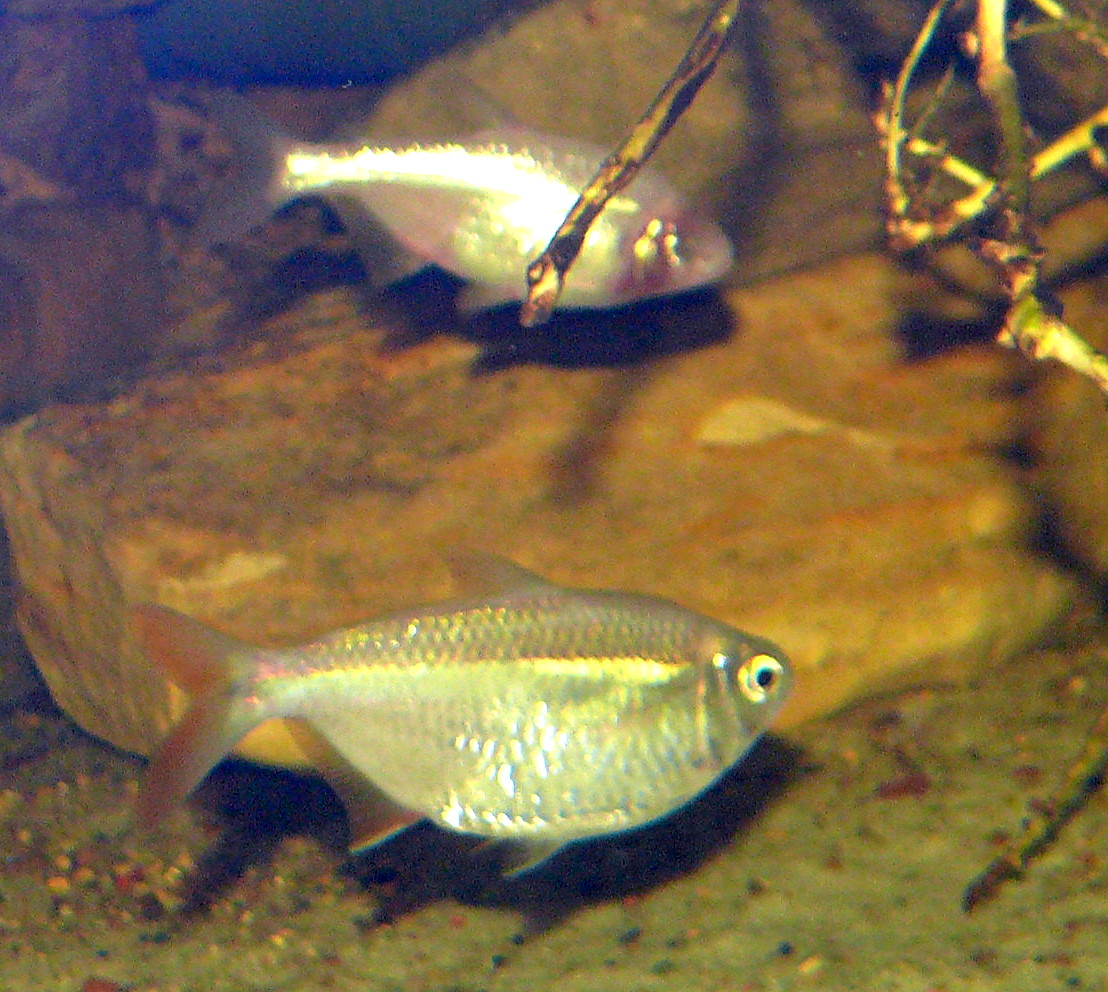 🇺🇸 United States and 1 moreMexican tetra
A freshwater characin with surface and blind cave forms, studied for evolutionary biology.Other · Rivers and lakes
 🇧🇷 Brazil and 4 moreWolf fish
A predatory freshwater ray-finned fish found across Central and South America.Other · Rivers and lakes
 Southeast AsiaKissing gourami
A Southeast Asian freshwater fish known for its unique mouth-to-mouth sparring behaviour.Other · Rivers and lakes
 🇧🇷 BrazilBanded leporinus
A striped freshwater fish from the Amazon kept in home tanks and occasionally caught by anglers.Other · Rivers and lakes
