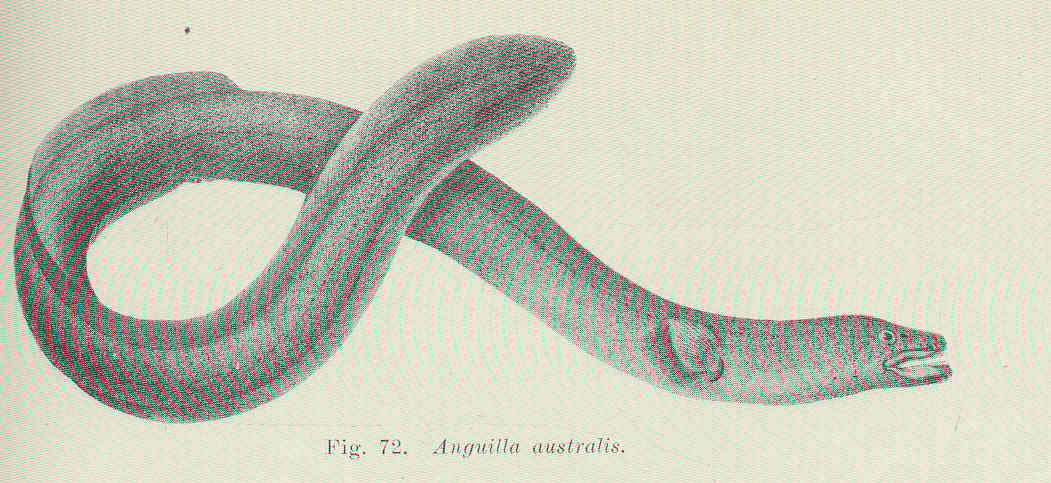
Mottled eel
Tropical freshwater eel found in Africa and Asia
The mottled eel is a tropical, catadromous species living in fresh waters across East Africa and South Asia. It migrates to the ocean to breed and supports local subsistence fisheries despite conservation concerns.
- Males reach up to 121 cm in length
- Listed as Near Threatened by IUCN in 2019
- Migrates to Indian Ocean to breed
- Found in East Africa and South Asia
- Feeds on benthic crustaceans and worms
What it is
The mottled eel is a demersal, catadromous fish belonging to the family Anguillidae. It lives primarily in tropical freshwater environments but travels to the sea for reproduction. Adults can grow up to 121 centimetres in length and weigh as much as seven kilograms. Its body is adapted for life near the bottom of rivers and lakes, where it hunts for food among the sediment.
Where it lives
This species has a wide distribution across tropical regions. It is found in East Africa, including Mozambique, Malawi, and recently Madagascar. In Asia, its range covers Bangladesh, Sri Lanka, the Andaman Islands, Sumatra, and Indonesia. The eels inhabit freshwater systems at depths between three and ten metres before migrating to the Indian Ocean.
How it lives
These eels are demersal, meaning they live and feed near the bottom of their habitat. Their diet consists mainly of benthic organisms such as crustaceans, mollusks, worms, and other small fish. They spend the majority of their lives in freshwater rivers and lakes, remaining in these environments until they are ready to reproduce.
Breeding and life cycle
The mottled eel is catadromous, which means it lives in fresh water but migrates to the sea to spawn. Adults travel to the Indian Ocean to breed. After hatching, the young likely drift back to coastal and freshwater areas, though specific details of larval development are not detailed in the provided text.
Fish and people
Local communities harvest this eel for subsistence purposes. Due to their large size, they are not suitable for the aquarium trade. They serve as a food source in regions where they are abundant, supporting small-scale fisheries rather than industrial commercial operations.
Status and threats
The International Union for Conservation of Nature listed the mottled eel as Near Threatened in 2019. Despite its wide geographic range, the population faces pressures that have led to this conservation status. Taxonomic debates have occurred, with some databases using the name A. nebulosa, but the IUCN recognises A. bengalensis.

Questions people ask about Mottled eel
Where does the mottled eel live?
It lives in tropical freshwater systems in East Africa and South Asia, including countries like Mozambique, Bangladesh, and Indonesia. It stays at depths of three to ten metres before migrating to the ocean.
Is the mottled eel endangered?
The IUCN Red List classified the species as Near Threatened in 2019. This status indicates it faces risks that could lead to a higher threat category if conservation measures are not maintained.
What do mottled eels eat?
They are demersal feeders that consume benthic prey. Their diet primarily includes crustaceans, mollusks, worms, and small finfish found near the bottom of their freshwater habitats.
Good reading and sources
- Anguilla bengalensis on WikipediaEncyclopedia
- More photos on Wikimedia CommonsPhotos
- Wikidata recordOpen data
The facts on this page come from the Wikipedia article "Anguilla bengalensis", written by its contributors and used under the CC BY-SA 4.0 licence, and from its Wikidata record (CC0). EveryFish rewrote the text in its own words, with AI assistance, and compares every page with the article to make sure no passage is copied. It may be reused under the same CC BY-SA 4.0 licence with a link back.
It may contain mistakes, and figures change over time. Nothing here is investment or buying advice. If something is wrong, tell us. Last refreshed 2026-11-15.
Like Mottled eel
All eels 🇳🇿 New ZealandNew Zealand longfin eel
A large, long-lived freshwater eel endemic to New Zealand, known for its extended dorsal fin and endangered status.Eel · Rivers and lakes · 1874
 🇮🇳 India and 4 moreZig-zag eel
A large freshwater spiny eel native to South and Southeast Asia, known for its zigzag pattern and predatory habits.Eel · Rivers and lakes · 1777
 🇺🇸 United States and 2 moreAmerican eel
A catadromous fish that migrates between North American rivers and the Sargasso Sea to spawn.Eel · Rivers and lakes
 🇨🇳 China and 3 moreAsian swamp eel
A freshwater, air-breathing fish native to Asia and introduced elsewhere.Eel · Rivers and lakes