
Pacific sand lance
Small forage fish of the North Pacific that burrows in sand
The Pacific sand lance is a small saltwater fish found across the North Pacific. It burrows into sandy seabeds and serves as a key prey species for whales, birds, and commercial fish. Adults grow up to 30 cm and spawn in intertidal zones during winter.
- Burrows into coarse sand using a pointed snout
- Key prey for whales, sea lions, and commercial fish
- Spawns in intertidal zones with high site fidelity
- Alaska banned fishing for this species in 1999
- Grows rapidly as a juvenile in nearshore waters
What it is
The Pacific sand lance is a slender marine fish with an eel-like shape and a pointed snout used for digging. It lacks pelvic fins and has a long dorsal fin without spines. The body features metallic black backs and white bellies, separated by blue or silver sides. Small cycloid scales cover its skin, and a raised lateral line runs along its back. Adults usually reach 17 cm, though some grow to 30 cm. This species belongs to the sand lance family, named for its habit of immersing itself in sediment.
Where it lives
This fish inhabits a wide area of the North Pacific, stretching from the Arctic regions of North America to the Sea of Okhotsk. Records show presence in the Hudson Bay, Beaufort Sea, Chukchi Sea, and Bering Sea. It also appears near Japan and as far south as Southern California. They live in both nearshore and offshore zones, ranging from surface waters to depths of 275 metres. While they tolerate various seabed types, they prefer coarse sand with specific grain sizes for burrowing.
How it lives
Pacific sand lances feed on zooplankton throughout their lives. Juveniles stay in shallow coastal areas, while adults move to deeper offshore waters after reaching maturity. This shift in habitat is linked to their development. They form large schools that can be seen at the surface or deep underwater. As a crucial part of the food web, they support many predators. Twelve mammal species, forty-five fish types, and forty bird species hunt them. Gray whales and Steller sea lions are among their notable predators.
Breeding and life cycle
Spawning occurs annually between November and April, often in late winter. Adults return to the same intertidal beaches where they hatched, showing strong site fidelity. They lay sticky eggs on coarse sand or fine gravel in the splash zone. These demersal eggs incubate for about a month before larvae emerge at 5 mm long. Juveniles grow rapidly in nearshore waters, doubling in size within months. They reach sexual maturity in their second year, with males maturing slightly earlier than females.
Fish and people
This species is vital for commercial fisheries indirectly, as it feeds valuable fish stocks. Alaska banned fishing for Pacific sand lance in 1999 to protect the ecosystem. Washington state lists it as a priority species due to its ecological role. Coastal development and pollution threaten their spawning grounds because they rely on specific beach habitats. Conservation efforts focus on maintaining healthy predator populations by ensuring adequate prey availability. Long-term monitoring is considered necessary to track population changes.

Questions people ask about Pacific sand lance
What does the Pacific sand lance eat?
Both juvenile and adult Pacific sand lances feed on zooplankton. Juveniles forage in nearshore areas, while adults hunt in offshore waters. This diet supports their rapid growth during the first few months of life.
Where do Pacific sand lances spawn?
They spawn in intertidal zones on beaches with coarse sand or fine gravel. Adults return to the same sites where they hatched. Eggs attach to the substrate and incubate for about a month before larvae emerge.
Is fishing for Pacific sand lance allowed?
Alaska placed a ban on fishing for this species in 1999, which remains in effect. The ban aims to protect the marine ecosystem, as the fish is a critical food source for many commercial species and wildlife.
How big do Pacific sand lances get?
Most adults grow to around 17 cm in length. Some individuals have been measured at up to 30 cm. They typically weigh up to 100 g. Their slender, eel-like bodies help them burrow into sand efficiently.
Good reading and sources
- Ammodytes hexapterus on WikipediaEncyclopedia
- More photos on Wikimedia CommonsPhotos
- Wikidata recordOpen data
The facts on this page come from the Wikipedia article "Ammodytes hexapterus", written by its contributors and used under the CC BY-SA 4.0 licence, and from its Wikidata record (CC0). EveryFish rewrote the text in its own words, with AI assistance, and compares every page with the article to make sure no passage is copied. It may be reused under the same CC BY-SA 4.0 licence with a link back.
It may contain mistakes, and figures change over time. Nothing here is investment or buying advice. If something is wrong, tell us. Last refreshed 2026-11-15.
Like Pacific sand lance
All other fish WorldStriped marlin
Fast pelagic predator with blue stripesOther · Open ocean
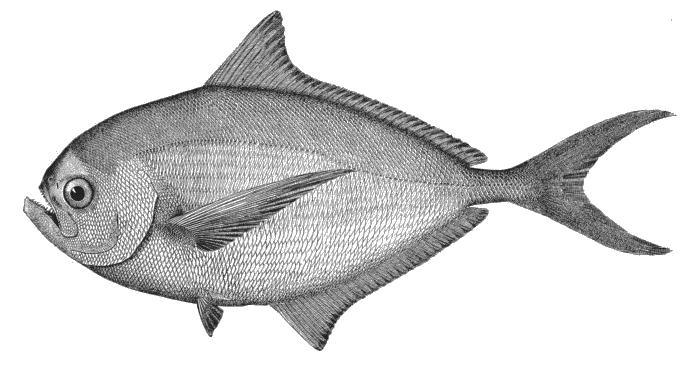 WorldPomfret
A family of scombriform fish found in oceans worldwide, valued as food.Other · Open ocean
 WorldPorcupinefish
Spiny marine fish that inflate into a defensive sphere to deter predators.Other · Coasts and shelves
 WorldBluefish
Aggressive marine pelagic fish found in temperate and subtropical waters worldwide.Other · Coasts and shelves