
Convict tang
Striped marine surgeonfish found across the Indo-Pacific.
The convict tang is a striped marine fish in the surgeonfish family. It lives in tropical Indo-Pacific waters from Africa to Central America. People catch it for food and the aquarium trade in places like Hawaii.
- Has six bold black stripes on a yellowish body
- Reaches a maximum length of about 27 cm
- Feeds in large schools on filamentous algae
- Possesses sharp retractable spines on the tail
- Found from East Africa to Central America
What it is
This marine ray-finned fish belongs to the surgeonfish family. It has an oval, laterally compressed body with a small head and pointed snout. The mouth is terminal with thick lips. Its most striking feature is the pattern of bold black stripes on a yellowish background. A sharp, retractable spine sits on each side of the tail base for defence. Adults reach about 27 cm in length.
Where it lives
It lives throughout the tropical Indo-Pacific region. The range stretches from the East African coast and Madagascar to southwestern Japan and Australia. It also occurs in Central America and many Pacific island groups. These fish inhabit hard bottoms in lagoons, reef slopes, bays and estuaries. Juveniles often stay in tide pools, while larger individuals dive to depths of 90 metres.
How it lives
Adults form large schools to feed on filamentous algae growing on coral or rock. They often graze near freshwater discharges. These groups can overwhelm damselfishes that try to defend their territories. The species uses its sharp caudal spines for offence or defence when threatened. It shares its habitat with the zebra tang, though the two have different stripe counts.
Breeding and life cycle
Spawning involves aggregations where males and females gather together. Specific details on egg release or larval development are not provided in the available records.
Fish and people
Fishers target this species for food across much of its range. In some areas, it supports commercial fisheries. Recreational anglers in Hawaii pursue it for sport. It is also collected for the home aquarium trade due to its distinctive appearance. In Hawaii, it is locally known as manini.
Status and threats
No specific conservation status is listed in the provided information. The species faces pressure from fishing for food and the aquarium trade. Overfishing or habitat degradation could impact local populations, but no formal threat assessment is detailed here.


Questions people ask about Convict tang
Why is it called a convict tang?
The name comes from its bold black vertical stripes on a pale background, which resemble traditional prison uniforms. This distinct pattern makes it easy to identify among other reef fish.
Is the convict tang dangerous to humans?
It has sharp, retractable spines on each side of the tail base. These are used for defence and can cause injury if handled carelessly, but the fish is not venomous or aggressive towards people.
What does the convict tang eat?
It is an herbivore that grazes on filamentous algae. You will often find it feeding on algae growing on coral or rocky substrates, particularly near freshwater discharges in lagoons and bays.
Good reading and sources
- Acanthurus triostegus on WikipediaEncyclopedia
- More photos on Wikimedia CommonsPhotos
- Wikidata recordOpen data
The facts on this page come from the Wikipedia article "Acanthurus triostegus", written by its contributors and used under the CC BY-SA 4.0 licence, and from its Wikidata record (CC0). EveryFish rewrote the text in its own words, with AI assistance, and compares every page with the article to make sure no passage is copied. It may be reused under the same CC BY-SA 4.0 licence with a link back.
It may contain mistakes, and figures change over time. Nothing here is investment or buying advice. If something is wrong, tell us. Last refreshed 2026-11-15.
Like Convict tang
All reef fish WorldLonghorn cowfish
Box-shaped reef fish with long head hornsReef fish · Coasts and shelves · 1758
 🇮🇩 Indonesia and 2 moreRed lionfish
Venomous coral reef fish native to the Indo-Pacific and invasive in the Atlantic.Reef fish · Coral reefs · 1758
 🇧🇷 Brazil and 1 moreFrench angelfish
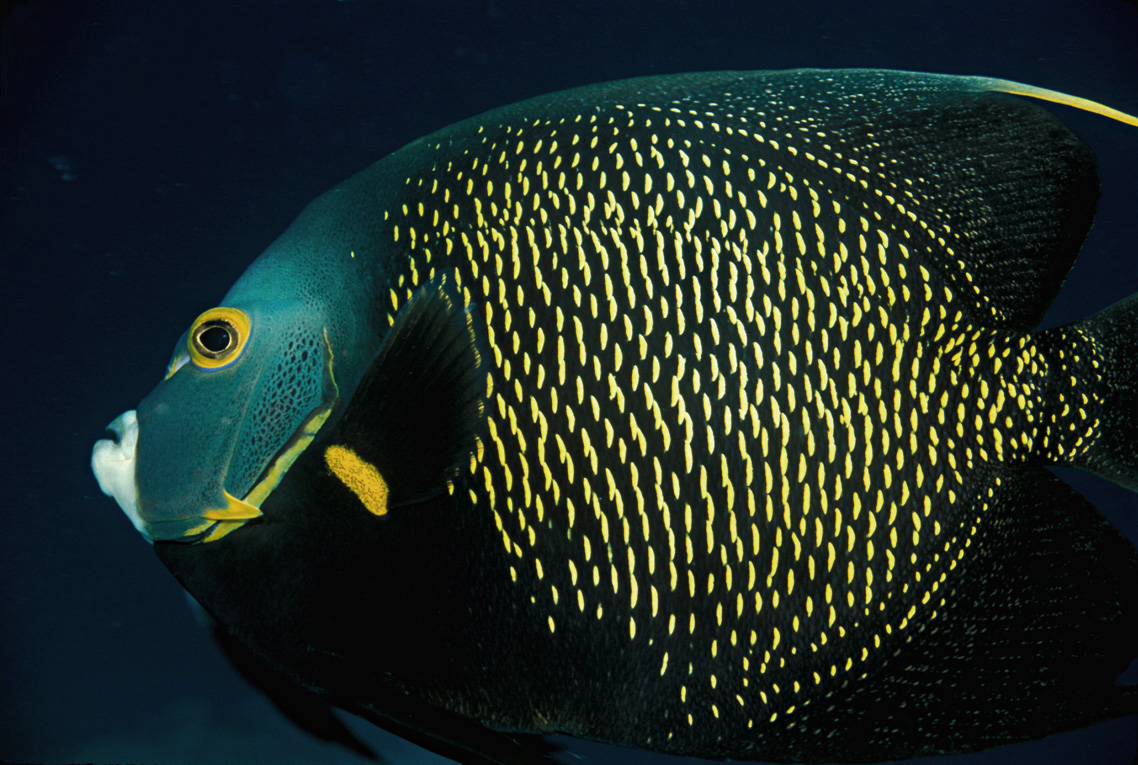
A slow-growing Caribbean reef fish known for its sponge diet.Reef fish · Coasts and shelves · 1799
 🇲🇾 Malaysia and 4 moreHumphead wrasse
The largest reef-dwelling wrasse, known for its forehead hump and endangered status.Reef fish · Coasts and shelves · 1801
More from Acanthuridae
All of them WorldClown unicornfish
A reef-dwelling surgeonfish with orange tail spines and a black face mask.Reef fish · Coral reefs · 1801
 OceaniaAchilles tang
A black reef fish with an orange tail spot.Reef fish · Coral reefs · 1803
 🇺🇸 United States and 2 moreYellow tang
Bright yellow Pacific reef fish kept in marine aquariums.Reef fish · Coasts and shelves · 1828
 WorldPowder blue tang
A bright blue reef fish from the Indian Ocean.Reef fish · Coasts and shelves · 1833