
Orange roughy
Long-lived deep-sea fish with bright red scales
The orange roughy is a slow-growing deep-sea fish found in cold waters across the Pacific and Atlantic oceans. It can live for over 200 years, making it highly vulnerable to overfishing despite its commercial importance.
- Can live for over 200 years
- Does not breed until 20 to 80 years old
- Accumulates high levels of mercury
- Largest known slimehead species
- Fisheries collapsed quickly after 1970s
What it is
The orange roughy is a large, deep-sea fish with a laterally compressed body and a rounded head. Its skin is covered in ctenoid scales that give it a bright brick-red colour, which fades to yellow-orange after death. The head features muciferous canals part of the lateral line system. It has a single dorsal fin with spines and soft rays, along with a forked tail. The mouth is large and oblique, with a bluish-black interior. This species is the largest known member of the slimehead family, reaching up to 75 cm in standard length and weighing as much as 7 kg.
Where it lives
This species inhabits cold, deep waters between 180 and 1,800 metres. It is found in the Western Pacific Ocean, the eastern Atlantic from Iceland to Morocco and Namibia to South Africa, and the Indo-Pacific near New Zealand and Australia. Populations also exist in the eastern Pacific off Chile. The fish prefers areas with high water movement, such as undersea canyons and seamounts, where prey concentrations are dense. These geologic structures provide ideal hydrologic conditions for the fish to congregate during different metabolic phases.
How it lives
Orange roughy are sluggish and demersal, often forming aggregations with high population density. They cycle through active feeding and inactive resting phases, losing pigmentation when inactive. Juveniles primarily consume zooplankton like krill and amphipods, while adults feed on smaller fish and squid. Diet composition changes with depth, suggesting resource partitioning to avoid competition. Predators include deep-roving sharks, cutthroat eels, and snake mackerels. The fish seeks areas with specific hydrologic conditions to match its metabolic needs and seasonal prey availability.
Breeding and life cycle
These fish are oceanodromous pelagic spawners that migrate hundreds of kilometres to spawning grounds. They form large aggregations, possibly segregated by gender, to release sperm and eggs simultaneously into the water. The buoyant eggs rise to around 200 metres to develop before young fish descend to deeper waters. Spawning occurs around June or July and may last three weeks. Females have low fecundity, producing few eggs relative to body weight. Sexual maturity is reached very late, typically between 20 and 80 years of age, depending on the population.
Fish and people
The flesh is firm with a mild flavour, sold skinned and filleted. Originally called slimehead, it was renamed orange roughy in New Zealand in 1975 to improve marketability. The United States and China are major consumers. Due to its long lifespan, the fish accumulates significant mercury, posing health risks with regular consumption. It is also a poor source of omega-3 fatty acids. Environmental groups have listed it as unsustainable due to overfishing and destructive bottom trawling methods. Retailers often use ecolabels to guide sustainable purchasing decisions.
Status and threats
Stocks are highly susceptible to overfishing due to slow growth and late maturity. Many fisheries, particularly in New Zealand and Australia, collapsed within decades of exploitation starting in the late 1970s. Recovery is slow, with some stocks remaining well below unfished levels. Management organisations like SPRFMO have set catch limits for high seas fisheries. In New Zealand, the Quota Management System regulates catches, though historical misestimation of biomass led to severe depletion. The UK Marine Conservation Society categorises the species as vulnerable to exploitation.

Questions people ask about Orange roughy
How long do orange roughy live?
Orange roughy are the longest-lived commercial fish species, with lifespans exceeding 200 years. Some specimens caught near Tasmania have been aged at 250 years, and one caught east of Wellington was estimated to be over 230 years old.
Why is orange roughy considered unsustainable?
The species grows slowly and matures very late, often not breeding until decades old. This low stock resilience means populations recover very slowly from fishing pressure. Many stocks were severely depleted within years of commercial exploitation beginning in the 1970s.
Is it safe to eat orange roughy regularly?
Regular consumption may have adverse health effects due to high mercury accumulation. Levels range from 0.30 to 0.86 ppm, significantly higher than the average for other edible fish. It is also a poor source of omega-3 fatty acids compared to most other fish.
Where are orange roughy found?
They live in cold, deep waters of the Western Pacific, eastern Atlantic, Indo-Pacific, and eastern Pacific. Key fishing areas include waters off New Zealand, Australia, Namibia, and Chile, typically at depths between 180 and 1,800 metres.
Good reading and sources
- Orange roughy on WikipediaEncyclopedia
- More photos on Wikimedia CommonsPhotos
- Wikidata recordOpen data
The facts on this page come from the Wikipedia article "Orange roughy", written by its contributors and used under the CC BY-SA 4.0 licence, and from its Wikidata record (CC0). EveryFish rewrote the text in its own words, with AI assistance, and compares every page with the article to make sure no passage is copied. It may be reused under the same CC BY-SA 4.0 licence with a link back.
It may contain mistakes, and figures change over time. Nothing here is investment or buying advice. If something is wrong, tell us. Last refreshed 2026-11-15.
Like Orange roughy
All other fish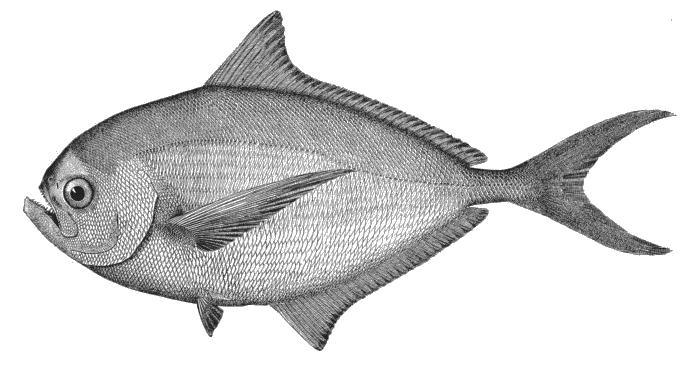 WorldPomfret
A family of scombriform fish found in oceans worldwide, valued as food.Other · Open ocean
 WorldOilfish
Deep-sea snake mackerel with oily, laxative flesh.Other · Open ocean
 🇯🇵 Japan and 1 moreGiant grenadier
A large deep-sea rattail from the North Pacific.Other · Open ocean
 🇳🇿 New Zealand and 3 moreHāpuku
Large deep-water wreckfish prized for food and aquaculture.Other · Coasts and shelves