
Oilfish
Deep-sea snake mackerel with oily, laxative flesh.
The oilfish is a large, deep-dwelling snake mackerel found in tropical and temperate oceans worldwide. Its meat contains wax esters that act as a strong laxative, leading to frequent mislabelling incidents in global markets.
- Can grow up to 3 metres in length
- Meat contains wax esters that act as laxatives
- Often mislabelled as cod or butterfish
- Lives at depths of 100 to 800 metres
- Found in tropical and temperate oceans worldwide
What it is
This species is a large, fusiform fish belonging to the snake mackerel group. It features rough scales, prominent fangs, and two pairs of finlets behind its dorsal and anal fins. The body has a uniform brown colour. Adults typically reach 1.5 metres in length, though they can grow up to 3 metres. It is the sole member of its genus.
Where it lives
Oilfish inhabit tropical and temperate waters across the globe. Their range includes the Atlantic, Indian, and Pacific oceans, as well as the Mediterranean Sea. They dwell in deep benthic environments along continental slopes and around seamounts. Most individuals are found between depths of 200 and 400 metres, though they can occur as deep as 800 metres.
How it lives
These fish often live alone or in pairs within deep water habitats. When food is scarce on the seafloor, they migrate vertically towards the surface at night to hunt. Their diet consists of other fish, cephalopods, and crustaceans. This nocturnal feeding behaviour allows them to exploit prey resources in upper water columns while resting in deeper zones during the day.
Fish and people
Fisheries rarely target this species directly, using handlines in limited areas. It is frequently caught as bycatch in tuna and swordfish longline operations. The meat is rich in flavour but contains wax esters that cause severe diarrhea if eaten in quantity. Vendors sometimes mislabel it as butterfish, cod, or white-fish. In Cabo Verde, it is known locally as xoba or Cagazeite, a name referencing its purgative effects.
Status and threats
No specific conservation status is listed for this species. However, regulatory bodies have intervened due to health risks from mislabelling. After a 2007 incident in Hong Kong where hundreds fell ill, authorities issued guidelines to prevent incorrect labeling. Similar cases were reported in Canada, highlighting ongoing issues with consumer safety and accurate product identification in retail markets.

Questions people ask about Oilfish
Why is oilfish dangerous to eat?
The meat contains high concentrations of wax esters which the human body cannot digest properly. Consuming large quantities acts as a strong laxative, causing stomach pain and diarrhea. This effect is why it is often regulated or mislabelled in markets.
Where does the oilfish live?
It is found in tropical and temperate oceans worldwide, including the Atlantic, Indian, and Pacific. It inhabits deep waters on continental slopes and seamounts, typically between 200 and 400 metres depth, though it can range from 100 to 800 metres.
What happened in the ParknShop incident?
In 2007, a supermarket chain in Hong Kong sold mislabelled oilfish, causing over 600 people to become sick with diarrhea. The chain was fined for inappropriate labelling. This event led to new guidelines for labeling oilfish and escolar to protect consumers.
Good reading and sources
The facts on this page come from the Wikipedia article "Oilfish", written by its contributors and used under the CC BY-SA 4.0 licence, and from its Wikidata record (CC0). EveryFish rewrote the text in its own words, with AI assistance, and compares every page with the article to make sure no passage is copied. It may be reused under the same CC BY-SA 4.0 licence with a link back.
It may contain mistakes, and figures change over time. Nothing here is investment or buying advice. If something is wrong, tell us. Last refreshed 2026-11-15.
Like Oilfish
All other fish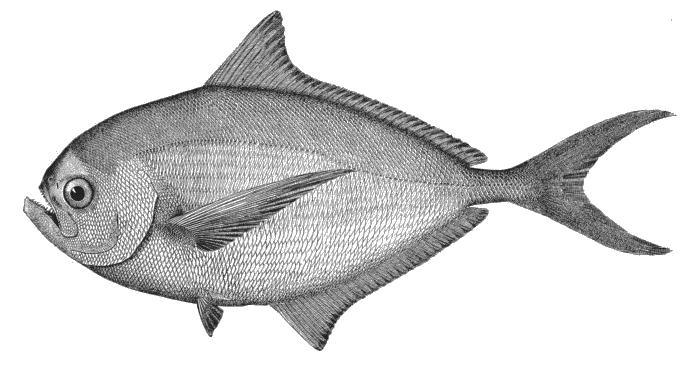 WorldPomfret
A family of scombriform fish found in oceans worldwide, valued as food.Other · Open ocean
 🇯🇵 Japan and 1 moreGiant grenadier
A large deep-sea rattail from the North Pacific.Other · Open ocean
 WorldOarfish
Extremely long pelagic fish known for their ribbon-like bodies and association with sea serpent myths.Other · Open ocean · 1772
 WorldAnglerfish
Ray-finned fish using a modified dorsal fin ray as a lure to catch prey.Other · Coasts and shelves · 1829