
Lanternfish
Small bioluminescent mesopelagic fish found in oceans worldwide.
Lanternfish are small, light-emitting fish belonging to the family Myctophidae. They form one of the most abundant vertebrate groups on Earth, playing a key role in deep-sea ecosystems and global carbon cycles through their daily vertical migrations.
- Global biomass may reach 16 gigatonnes, up to 65% of deep-sea fish mass.
- Daily migration moves carbon from surface to deep ocean via fecal pellets.
- Photophore patterns vary by species and sometimes between sexes.
- Create the 'deep scattering layer' visible on sonar as a false sea floor.
- Some individuals ingest plastic debris from ocean garbage patches.
What it is
Lanternfish are slender, compressed fish covered in small silvery scales. They possess a large blunt head, big eyes, and a mouth lined with tiny teeth. Most have a single dorsal fin, a forked tail, and an adipose fin. Their bodies display paired rows of photophores that emit blue, green, or yellow light. These light organs form species-specific patterns used for identification. Shallow species appear iridescent blue or silver, while deeper dwellers are dark brown or black. Sizes range from two to thirty centimetres, with most individuals staying under fifteen centimetres.
Where it lives
These fish inhabit oceans globally across all major basins. They typically reside in the mesopelagic zone between three hundred and fifteen hundred metres deep during daylight. Many species stay near coastlines over continental slopes. Some deeper-living types do not migrate, while others move sporadically based on sex, latitude, or season. They form dense layers at specific depths to avoid competition. This distribution makes them among the most widespread vertebrates on the planet.
How it lives
Lanternfish perform daily vertical migrations, rising to surface waters at dusk to feed on zooplankton. They return to deeper darkness by dawn to avoid predators. This movement helps transport carbon to the ocean floor through waste deposition. Their bioluminescence aids camouflage via counterillumination, matching overhead light to hide their silhouette. They also use light signals for shoaling and courtship. Predators include whales, sharks, tuna, penguins, and squid. Some individuals have been found consuming plastic debris in polluted areas.
Fish and people
Commercial fisheries target lanternfish off South Africa, in the sub-Antarctic, and in the Gulf of Oman. Their immense biomass, estimated at up to sixteen gigatonnes, exceeds total global fish catches several times over. They serve as a crucial food source for larger marine animals. Despite their abundance, they are not widely consumed by humans directly. Their ecological importance lies in supporting higher trophic levels and facilitating biological carbon pumping.


Questions people ask about Lanternfish
What is a lanternfish?
Lanternfish are small mesopelagic fish belonging to the family Myctophidae. They are known for their bioluminescent organs called photophores. These fish are found in oceans worldwide and form one of the most abundant vertebrate groups on Earth.
Why do they glow?
They use light for camouflage through counterillumination, matching surface light to hide from predators below. Light patterns also help them identify their own species and communicate during mating or schooling behaviours.
Where do they live?
They inhabit oceans globally, primarily in the mesopelagic zone between three hundred and fifteen hundred metres deep. During the day they stay deep, rising to shallower waters at night to feed on zooplankton.
Are they important ecologically?
Yes, they are a major food source for whales, sharks, and birds. Their daily vertical migration transports carbon to the deep ocean, making them vital for the biological pump and global carbon cycling processes.
Good reading and sources
The facts on this page come from the Wikipedia article "Lanternfish", written by its contributors and used under the CC BY-SA 4.0 licence, and from its Wikidata record (CC0). EveryFish rewrote the text in its own words, with AI assistance, and compares every page with the article to make sure no passage is copied. It may be reused under the same CC BY-SA 4.0 licence with a link back.
It may contain mistakes, and figures change over time. Nothing here is investment or buying advice. If something is wrong, tell us. Last refreshed 2026-11-15.
Like Lanternfish
All other fish WorldGlasshead barreleye
Deep-sea fish with mirror-based eyesOther · Open ocean
 WorldRibbonfish
Deep-sea lampriforms with long, tape-like bodiesOther · Open ocean
 WorldMarine hatchetfish
Small deep-sea fish with a distinctive compressed body shape and bioluminescent camouflage.Other · Open ocean
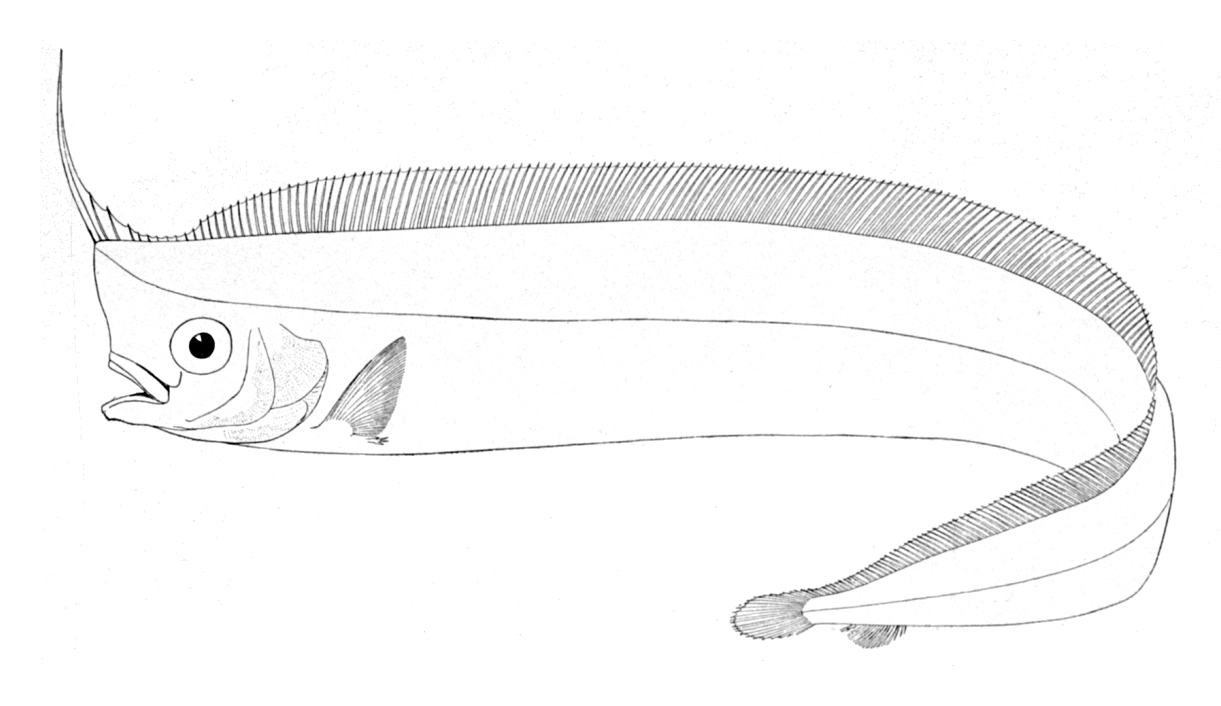 WorldCrestfish
Deep-sea ribbon fish with a head crest and ink sacsOther · Open ocean