
Dwarf gourami
Small South Asian freshwater fish with vibrant colours.
The dwarf gourami is a small freshwater species native to Pakistan, India and Bangladesh. It inhabits slow-moving vegetated waters and is popular in aquariums for its bright colours and peaceful nature, though it was historically eaten as food in its home range.
- Males build bubble nests using plant debris
- Can spit water to catch prey above surface
- Reaches a maximum length of 8.8 cm
- Popular aquarium fish with many colour morphs
- Native to slow-moving waters in South Asia
What it is
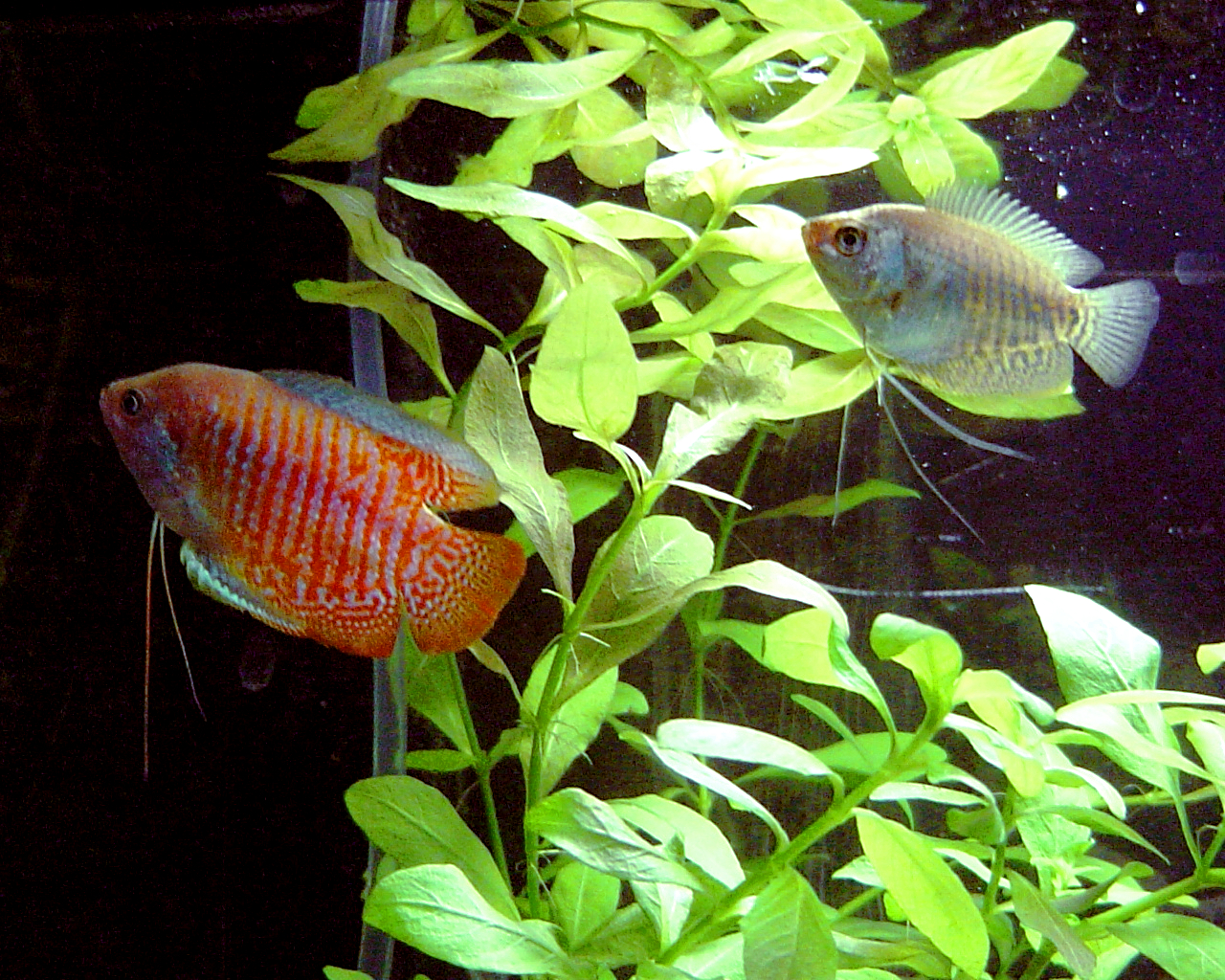
This small fish reaches a maximum length of 8.8 centimetres. Wild males display diagonal stripes of alternating blue and red, while females are silvery. The dorsal fin shape helps distinguish sex, with males having pointed fins and females possessing rounded ones. Thread-like pelvic fins contain touch-sensitive cells. Captive bred varieties often show solid colours like powder blue or red flame. They can project a short stream of water from their mouths to catch prey above the surface.
Where it lives
The species originates from Pakistan, India and Bangladesh. It lives in slow-moving waters such as rivulets, streams and lakes. These habitats typically feature abundant vegetation. Although native to South Asia, the fish has been widely distributed outside this region through the aquarium trade. It tolerates temperatures around 27 degrees Celsius.
How it lives
Dwarf gouramis are omnivores that prefer a varied diet including algae and meaty foods. They are generally peaceful but can be slightly territorial. In the wild, they use their ability to spit water to hunt insects above the surface. This behaviour helps them access prey that other fish cannot reach. They thrive in community tanks if provided with adequate space and hiding spots among plants.
Breeding and life cycle
Males construct elaborate floating bubble nests using plant material and debris. Spawning requires shallow water levels and warm temperatures near 30 degrees Celsius. The male courts the female by flaring his fins. During spawning, he embraces her to release and fertilise up to 800 eggs. He protects the nest and fry until they are free swimming after three days. Females should be removed post-spawning to prevent aggression.
Fish and people
Historically, this fish served as a popular food source in its native range alongside snakeskin gouramis. Local names include Kholisha in Bangladesh and Kungee in Punjab. Today, it is primarily valued in the aquarium trade for its vibrant colours. Breeders have developed many colour morphs. However, specimens raised in Singapore may carry a specific iridovirus. They are sometimes confused with thick-lipped gouramis when young.


Questions people ask about Dwarf gourami
How big do dwarf gouramis get?
They reach a maximum total length of 8.8 centimetres. Males are often more colourful than females, which are typically silvery. Size remains small enough for most community aquariums.
What do dwarf gouramis eat?
They are omnivores requiring a varied diet. Suitable foods include algae-based flakes, freeze-dried bloodworms, tubifex and brine shrimp. A mix of plant and meaty foods ensures proper nutrition.
Are dwarf gouramis aggressive?
They are generally peaceful but can be slightly territorial. They do well in community aquariums if given enough space. Males may defend their bubble nests aggressively during breeding periods.
How do dwarf gouramis breed?
Males build bubble nests with plant debris. They court females and spawn up to 800 eggs. The male guards the eggs and fry until they are free swimming, usually after three days.
Good reading and sources
- Dwarf gourami on WikipediaEncyclopedia
- More photos on Wikimedia CommonsPhotos
- Wikidata recordOpen data
The facts on this page come from the Wikipedia article "Dwarf gourami", written by its contributors and used under the CC BY-SA 4.0 licence, and from its Wikidata record (CC0). EveryFish rewrote the text in its own words, with AI assistance, and compares every page with the article to make sure no passage is copied. It may be reused under the same CC BY-SA 4.0 licence with a link back.
It may contain mistakes, and figures change over time. Nothing here is investment or buying advice. If something is wrong, tell us. Last refreshed 2026-11-15.
Like Dwarf gourami
All other fish 🇧🇷 Brazil and 3 moreTambaqui
A large freshwater fish from South America known for its heavy body and seed-eating habits.Other · Rivers and lakes
 WorldWeather loach
Small freshwater fish active before stormsOther · Rivers and lakes
 Southeast AsiaKissing gourami
A Southeast Asian freshwater fish known for its unique mouth-to-mouth sparring behaviour.Other · Rivers and lakes
 🇳🇬 NigeriaHingemouth
Small African fish with a unique proboscis-like mouthOther · Rivers and lakes