
Cod
Demersal fish of the genus Gadus, valued for food and oil.
Cod refers to demersal fish in the genus Gadus, primarily Atlantic and Pacific species. They inhabit cold northern waters and are globally significant for their mild flesh and liver oil, supporting major fisheries and historical trade networks.
- Atlantic cod can weigh up to 100 kilograms.
- Spawning occurs in cold waters between 4 and 6 degrees Celsius.
- Cod liver oil contains vitamins A, D, E and omega-3 acids.
- Dried cod trade has existed for over one thousand years.
- Pacific cod is smaller and darker than Atlantic cod.
What it is
The term cod describes demersal fish belonging to the genus Gadus within the family Gadidae. These fish typically display three rounded dorsal fins and two anal fins. Their pelvic fins sit beneath the gill covers, while a well-developed chin barbel hangs from the lower jaw. A distinct white lateral line runs from the gills to the tail. The back usually appears greenish or sandy brown with mottling, though some individuals show dark brown colouration. Atlantic cod can shift between gray-green and reddish-brown phases depending on water depth.
Where it lives
Atlantic cod inhabit colder, deeper waters across the North Atlantic Ocean. Pacific cod occupy similar environments in both eastern and western northern Pacific regions. Atlantic populations include distinct stocks such as those in the North Sea, Baltic Sea, and off Newfoundland. These groups rarely mix, though migrations to breeding grounds may span hundreds of kilometres. Pacific cod range extends through both sides of the northern Pacific basin.
How it lives
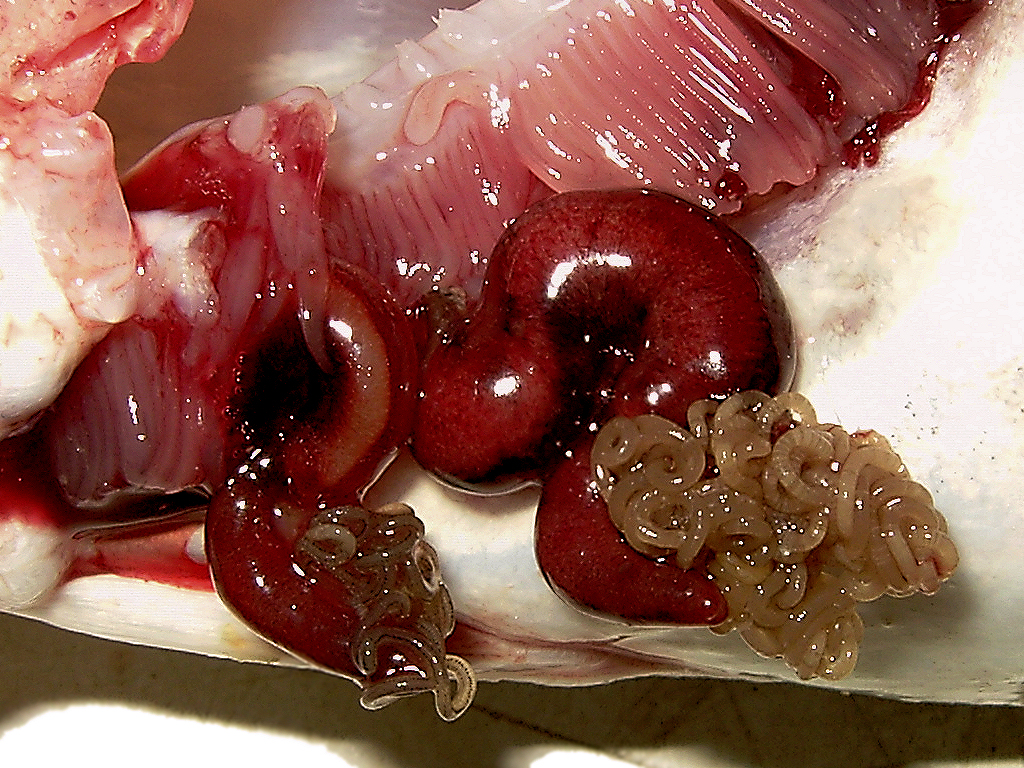
Adult cod are active hunters consuming sand eels, whiting, squid, crabs, lobsters, and molluscs. In the Baltic Sea, they prey heavily on herring and sprat, acting as top predators. Young cod feed on small benthic crustaceans like isopods. The species faces parasitic threats, notably the cod worm which enters the heart via the gills. Cod form schools, particularly during spawning seasons, and prefer rough seabed habitats.
Breeding and life cycle
Northeastern Atlantic cod spawn between January and April at depths around 200 metres where water temperatures range from 4 to 6°C. Courtship involves fin displays and male grunting before pairing. Eggs are planktonic, hatching after eight to twenty-three days into larvae that grow rapidly. After ten weeks in the pelagic zone, juveniles settle to the seabed and begin feeding on bottom-dwelling organisms. Maturity occurs at approximately fifty centimetres in length.
Fish and people
Cod serves as a major food source worldwide due to its mild flavour and dense white flesh. It features prominently in dishes like fish and chips in the United Kingdom. Cod livers provide oil rich in vitamins and omega-3 fatty acids. Historically, dried and salted cod supported international trade since the Viking era. Modern aquaculture attempts face challenges in larval survival, though dietary supplements show promise. Pacific cod enjoys strong global market demand.



Questions people ask about Cod
What does the word cod refer to?
Cod is the common name for demersal fish in the genus Gadus, including Atlantic and Pacific species. The term also applies to other unrelated fish whose names end in cod, such as blue cod or ling cod, due to market naming conventions.
How big do cod get?
Atlantic cod typically weigh between five and twelve kilograms, but specimens up to 100 kilograms have been recorded. Pacific cod are generally smaller and darker in colour compared to their Atlantic counterparts.
Where do cod live?
Atlantic cod inhabit colder, deeper regions throughout the North Atlantic Ocean. Pacific cod are found in both eastern and western areas of the northern Pacific Ocean. They prefer rough seabed habitats and can be found at various depths.
Is cod farmed commercially?
Farming Atlantic cod has attracted interest due to high prices and reduced wild catches. However, large-scale farming remains slow because larval production faces unpredictable survival rates. Researchers are exploring nutritional supplements to improve growth.
Good reading and sources
The facts on this page come from the Wikipedia article "Cod", written by its contributors and used under the CC BY-SA 4.0 licence, and from its Wikidata record (CC0). EveryFish rewrote the text in its own words, with AI assistance, and compares every page with the article to make sure no passage is copied. It may be reused under the same CC BY-SA 4.0 licence with a link back.
It may contain mistakes, and figures change over time. Nothing here is investment or buying advice. If something is wrong, tell us. Last refreshed 2026-11-15.
Like Cod
All cods and hakes 🇬🇧 United Kingdom and 4 moreHaddock
A North Atlantic cod family fish known for its black shoulder blotch and smoked preparations.Cod · Coasts and shelves · 1758
🇦🇷 Argentina and 1 moreArgentine hake
Commercial hake species from the southwest Atlantic.Cod · Coasts and shelves · 1933
 EuropeCommon ling
Large cod-like fish of the North AtlanticCod · Coasts and shelves
🇿🇦 South Africa and 1 moreSouth African hake
A commercial bottom-dwelling fish off southern Africa.Cod · Coasts and shelves
More from Gadidae
All of them WorldArctic cod
Small cold-water fish vital to Arctic food websCod · Coasts and shelves
 🇨🇦 Canada and 4 moreAtlantic cod
A large, spotted marine fish vital to North Atlantic fisheries.Cod · Coasts and shelves
 WorldPollock
Two species of North Atlantic marine fish in the genus Pollachius.Cod · Coasts and shelves
 WorldPacific cod
A large bottom-dwelling fish of the northern Pacific Ocean.Cod · Coasts and shelves