
Australian salmon
South Pacific marine fish native to Australia and New Zealand coasts.
Arripis trutta is a migratory marine fish found in the southwestern Pacific. It inhabits coastal waters from Queensland to Tasmania and around New Zealand. Valued by recreational anglers and traditional Māori fishers, it plays a key ecological role in inshore food chains despite its misleading common name.
- Reaches 89 cm in length and lives up to 26 years
- Diet shifted from krill to baitfish due to ocean warming
- Traditional Māori food source known as kahawai
- Forms large schools hunted by seals, sharks and seabirds
- Not related to true salmon despite its common name
What it is
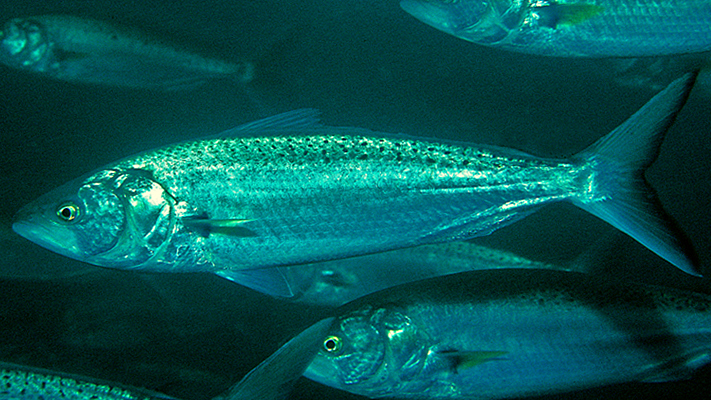
This streamlined fish has a long, slender body with dark bluish-green backs and silvery white bellies. Juveniles display golden bars on their flanks that break into large spots as they mature. Distinctive features include vivid yellow pectoral fins and blackish margins on the tail and dorsal fin. A bony ridge with serrations sits beneath the eye in young individuals, smoothing out in adults. It reaches up to 89 centimetres in length and weighs nearly 10 kilograms. Despite names like salmon or trout, it belongs to the family Arripidae, not Salmonidae.
Where it lives
The species inhabits the southwestern Pacific Ocean, primarily in the Tasman Sea and Bass Strait. In Australia, its range extends from Moreton Bay in Queensland down to western Victoria and northern Tasmania, with rare sightings near Kangaroo Island. Populations also exist around Lord Howe and Norfolk Islands. In New Zealand, it is found around most coasts but is more common north of Kaikōura on the South Island. Groups also live near the Chatham and Kermadec Islands. They frequent littoral waters, estuaries, and exposed coastal areas.
How it lives
These carnivorous fish are highly visual predators that form large schools. Adults feed mainly on small schooling baitfish like pilchards, sprats, and anchovies. Juveniles in sheltered bays eat crustaceans and polychaetes. Studies suggest a dietary shift since the late twentieth century from krill and squid to baitfish, likely due to warming waters from the East Australian Current extending southward. Seals, dolphins, and sharks prey on them. Their feeding behaviour pushes small fish to the surface, aiding seabirds like the white-fronted tern, which often feeds alongside them.
Breeding and life cycle
Spawning occurs in the surf zone between Lakes Entrance in Victoria and Bermagui in New South Wales. This activity takes place during late spring and summer. Individuals reach sexual maturity at around four years of age, having grown to approximately 39 centimetres in length. The species can live for up to 26 years. Migratory patterns allow them to travel thousands of kilometres, with adults congregating in large groups off oceanic beaches while juveniles remain in smaller schools in protected estuaries.
Fish and people
Māori people have long valued this fish, known as kahawai, as a traditional food source. Tribes migrated to river mouths in summer to catch swarming schools using specialised hooks with iridescent pāua shell. Early European settlers initially disliked the flesh, describing it as dry and coarse. However, it has become one of the most caught recreational fish in New Zealand, prized by anglers using light tackle or fly fishing. Commercial fisheries use purse seines, though much of the catch serves as pet food or bait due to lower consumer demand for the meat.
Status and threats
Fisheries New Zealand manages the stock to maintain populations at roughly 52 per cent of pre-commercial levels. In 2019, the population remained well above this target. The species faces no immediate extinction threat mentioned in the provided text. Its changing diet serves as a biological indicator of oceanic warming trends. While commercial landings occur in southern Australia and New Zealand, the fish is not considered endangered. Conservation efforts focus on sustainable harvest limits rather than emergency protection measures.
Questions people ask about Australian salmon
Is Australian salmon a true salmon?
No. Despite its name and the Latin species epithet trutta, it is not related to true salmons or trouts. It belongs to the family Arripidae within the order Scombriformes, whereas true salmons are in the family Salmonidae.
What do Australian salmon eat?
Adults primarily feed on small schooling baitfish such as pilchards, sprats, and anchovies. Juveniles eat crustaceans and polychaetes. Recent studies show a shift from krill and squid to baitfish, linked to warming ocean currents.
Where is the best place to catch kahawai?
In New Zealand, they are common north of Kaikōura and in the Cook Strait. In Australia, main landings occur in southern New South Wales and Eastern Victoria. Recreational anglers often catch them from beaches and rocks.
How can you tell this fish from similar species?
It can be distinguished from Arripis truttacea by its higher gill raker count of 33–40. It also has a larger tail than Arripis xylabion. Visually, look for vivid yellow pectoral fins and blackish margins on the dorsal and caudal fins.
Good reading and sources
- Arripis trutta on WikipediaEncyclopedia
- More photos on Wikimedia CommonsPhotos
- Wikidata recordOpen data
The facts on this page come from the Wikipedia article "Arripis trutta", written by its contributors and used under the CC BY-SA 4.0 licence, and from its Wikidata record (CC0). EveryFish rewrote the text in its own words, with AI assistance, and compares every page with the article to make sure no passage is copied. It may be reused under the same CC BY-SA 4.0 licence with a link back.
It may contain mistakes, and figures change over time. Nothing here is investment or buying advice. If something is wrong, tell us. Last refreshed 2026-11-15.
Like Australian salmon
All other fish 🇳🇿 New ZealandNew Zealand grayling
Extinct amphidromous fish endemic to New Zealand rivers and seas.Other · Rivers and lakes
 WorldBigeye trevally
A large marine fish found in tropical oceans, known for its nocturnal hunting and distinctive dark dorsal fin.Other · Coasts and shelves · 1825
 WorldGiant trevally
Large marine jack found across the Indo-Pacific, known for size and hunting skill.Other · Coasts and shelves · 1775
 WorldBartail flathead
A widespread marine flathead found across the Indo-Pacific.Other · Coasts and shelves · 1758
