
Striped dwarf catfish
Small Asian catfish found in brackish waters and swamps.
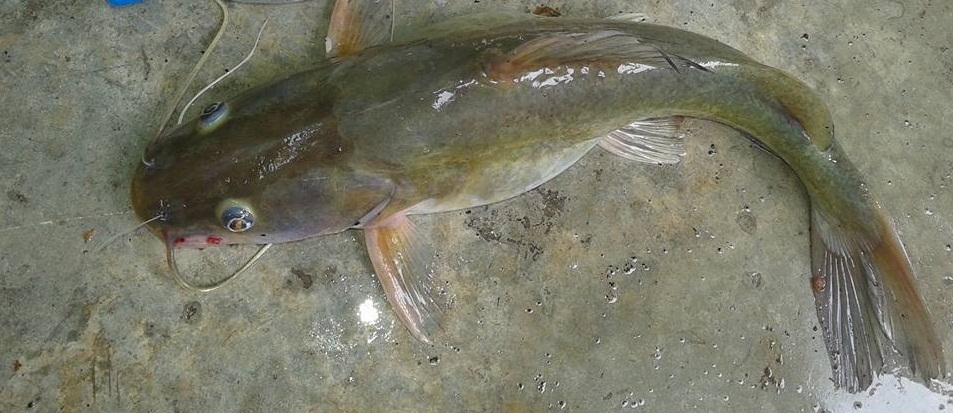
The Striped dwarf catfish is a small species native to South Asia. It inhabits brackish lakes and swamps with muddy bottoms. Recent population declines are linked to fishing, the pet trade and habitat loss.
- Grows to a maximum length of 21 cm
- Produces sounds during the spawning process
- Found in brackish lakes and swamps with mud
- Population decreasing due to trade and habitat loss
What it is
This small catfish belongs to the family Bagridae. It reaches a maximum length of 21 centimetres. The body is adapted for life in soft substrates. It prefers environments with marginal vegetation and mud. Its common name reflects its modest size compared to other relatives in the genus.
Where it lives
The species occurs across several South Asian nations. Records confirm presence in Pakistan, India, Sri Lanka, Nepal and Bangladesh. It may also live in Myanmar, though this is less certain. Populations in Southeast Asia are disputed due to physical similarities with other local Mystus species. It thrives in brackish systems rather than pure freshwater or open ocean.
How it lives
Information on daily behaviour and specific diet is limited in available records. The fish is known to produce audible sounds. This vocalisation occurs specifically during the spawning period. It shares its environment with various parasites, including the intestinal worm Zeylanechinorhynchus longinuchalis. These biological interactions form part of its ecological niche.
Breeding and life cycle
Reproduction involves specific acoustic signals. Adults make noises when they are ready to spawn. This behaviour helps coordinate mating activities. Details regarding egg count, incubation time or juvenile development are not provided in the current data. The timing of the breeding season likely aligns with local environmental cycles.
Fish and people
Humans interact with this species through capture and trade. It is collected for the aquarium hobby due to its small stature. Local fisheries also target it for food. However, these activities contribute to pressure on wild stocks. Habitat destruction further complicates its survival in natural swamp and lake systems.
Status and threats
Wild numbers are falling. Three main factors drive this decline. Overfishing removes adults from the population. The pet trade captures individuals for home tanks. Destruction of swamp and lake habitats reduces available living space. Conservation measures are needed to reverse this downward trend.
Questions people ask about Striped dwarf catfish
How big does the Striped dwarf catfish get?
This species remains relatively small. It reaches a maximum recorded length of 21 centimetres. This size makes it suitable for smaller aquarium setups compared to larger catfish varieties.
Where does this catfish live in the wild?
It inhabits brackish water systems in South Asia. You can find it in lakes and swamps with muddy bottoms and marginal vegetation across countries like India and Bangladesh.
Why is the population of this fish decreasing?
Numbers are dropping due to three main pressures. These include direct catching for food, removal for the pet trade, and the destruction of its natural swamp and lake habitats.
Good reading and sources
- Mystus vittatus on WikipediaEncyclopedia
- More photos on Wikimedia CommonsPhotos
- Wikidata recordOpen data
The facts on this page come from the Wikipedia article "Mystus vittatus", written by its contributors and used under the CC BY-SA 4.0 licence, and from its Wikidata record (CC0). EveryFish rewrote the text in its own words, with AI assistance, and compares every page with the article to make sure no passage is copied. It may be reused under the same CC BY-SA 4.0 licence with a link back.
It may contain mistakes, and figures change over time. Nothing here is investment or buying advice. If something is wrong, tell us. Last refreshed 2026-11-15.
Like Striped dwarf catfish
All catfishes 🇮🇳 IndiaSun catfish
A yellow catfish with a black shoulder spot from India.Catfish · Rivers and lakes
 🇮🇳 India and 4 moreAsian stinging catfish
A small freshwater catfish with a painful stingCatfish · Rivers and lakes
 🇧🇷 BrazilPiraíba
A massive Amazonian catfish known for its long barbels and role as an apex predator.Catfish · Rivers and lakes
🇮🇳 India and 4 moreLong Whiskers Catfish
A brackish water catfish with long barbels found in South and Southeast Asia.Catfish · Estuaries and mangroves
More from Bagridae
All of them 🇮🇳 India and 1 moreChaca chaca
A burrowing angler catfish from South Asian rivers with a flattened body and ambush hunting style.Catfish · Rivers and lakes
 🇦🇫 Afghanistan and 4 moreGiant river-catfish
Large bagrid catfish from South Asian riversCatfish · Rivers and lakes
 🇮🇳 India and 4 moreLong-whiskered catfish
Large Asian catfish prized for food and sport.Catfish · Rivers and lakes